

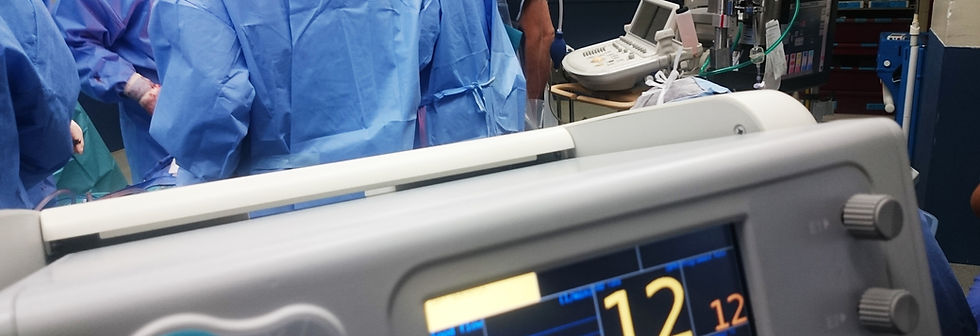
Anesthesia
Anesthesia is an essential part of most surgical procedures. Anesthetizing patients before and during surgery requires understanding, skill, and timing. Depending on the procedure, there are very different forms of anesthesia, with different dosages and possible interactions or side effects. An anesthesiologist is an expert in this field. The German Medical Association includes general, regional, and local anesthesia in the anesthesiologist's area of responsibility. This also includes pre- and post-treatment and the maintenance of vital functions during surgical and diagnostic procedures, as well as intensive care, emergency medicine, and pain management measures.
Career
Anesthesiologists are in high demand! After general medicine, internal medicine, and surgery, anesthesiology is one of the specialties with the largest number of practicing physicians. According to physician statistics from the German Medical Association, there were a total of 26,667 anesthesiologists in Germany in 2022, compared to only 22,875 in 2015. This means approximately 4,000 new specialists were recruited during this period, representing a nearly 18% increase in the number of practicing anesthesiologists. In 2022, men still outnumber women in anesthesiology. A total of 11,835 women will work as anesthesiologists in 2022, corresponding to a share of 44.3%. Therefore, the percentage of women in this specialty is increasing. In 2015, out of a total of 22,875 anesthesiologists, only 9,632 were women, corresponding to a 42% share. In 2014, the percentage was also close to 42%, with 9,190 women out of 22,071. As an anesthesiologist, you can also consider opening your own practice.
Future
It's surprising that less than half of anesthesiology physicians are women. It's precisely the numerous possible working hours and part-time models that allow many women to balance career and family. Working hours are mostly regulated, and models with 50% and 20% part-time work are usually possible without problems thanks to the ability to plan.
Subdivision
After or during specialist training, you can choose a specialized orientation. During training, you can use the 12 months to hone your skills and thus your profile as an anesthesiologist. Despite specialization, there is nothing stopping you from continuing to be needed in many ways as a well-rounded professional in this field. In practice, it can be observed that many anesthesiologists specialize in emergency medicine and intensive care. It is therefore not surprising that senior emergency physicians are often anesthesiologists. Career-wise, this specialized qualification also allows you to manage an intensive care unit. After specialist training, there is also the option of specializing in pediatric anesthesiology. In addition to medication, great sensitivity is required in treating the youngest patients. Pain therapy plays an important role in specializing in this field. After completing specialist training in anesthesiology, you can complete additional training in pain therapy. Due to the challenges of demographic change, more and more anesthesiologists are focusing and completing additional training in palliative medicine.
Earnings
As an anesthesiologist, you earn at least €6,518 per month at a university hospital and at least €6,196 at a municipal hospital. This means that the annual salary of a fully trained anesthesiologist is between €74,000 and €78,000 (according to the collective agreement).